The Essential Guide to Pre-Season Mountain Bike Maintenance: A Step-by-Step Tutorial
Don't let a mechanical failure ruin your first spring ride. Learn how to perform a comprehensive pre-season safety check and basic maintenance on your mountain bike with our expert step-by-step guide.
25.2.2026
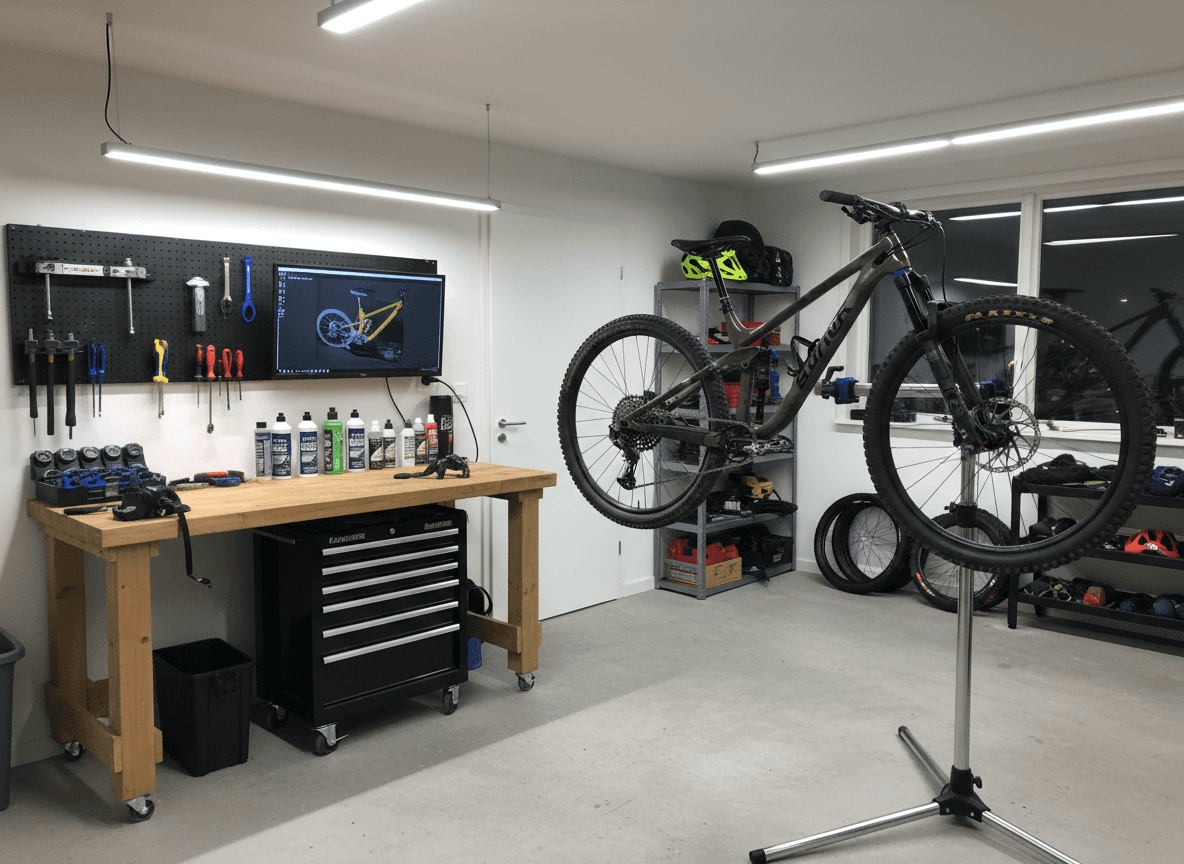
As the winter frost begins to recede and the trails start to dry, every mountain biker feels that familiar itch to get back into the saddle. However, after months of storage or harsh winter riding, your mountain bike requires more than just a quick dust-off. A thorough pre-season inspection is critical not only for performance but, more importantly, for your safety on technical terrain.
At EXIsport, we believe that understanding your equipment is the first step toward peak performance. This tutorial will walk you through a professional-grade "M-Check" and basic maintenance routine to ensure your bike is trail-ready for the 2026 season.
Why Pre-Season Maintenance Matters
Mountain bikes are high-performance machines subjected to extreme stresses. Over time, bolts can vibrate loose, hydraulic fluids can degrade, and drivetrain components can wear down. By spending an hour in the garage now, you prevent expensive repairs later and ensure that your brakes and suspension respond exactly when you need them most.
Required Materials and Tools
Before you begin, gather the following essentials:
- Bike repair stand (optional, but highly recommended)
- Set of Allen (Hex) keys (2mm through 8mm)
- Torx keys (specifically T25 for rotor bolts)
- Torque wrench (to prevent over-tightening carbon components)
- Chain lubricant (dry or wet depending on your local conditions)
- Bike-specific degreaser and cleaning brushes
- Floor pump with pressure gauge
- Clean microfiber cloths
Step-by-Step Pre-Season Inspection
Step 1: The Deep Clean and Frame Inspection
You cannot inspect what you cannot see. Start by thoroughly washing your bike using a bike-specific cleaner. Avoid high-pressure washers near bearings (bottom bracket, headset, and hubs) as they can force water past seals.
Once dry, inspect the frame closely. Look for hairline cracks, especially near weld points on aluminum frames or around the bottom bracket and head tube on carbon frames. If you find any deep gouges or cracks, consult a professional before riding.
Step 2: The "M-Check" Safety Inspection
The M-Check is a systematic way to cover all major components, following the shape of the letter 'M' from the front wheel up to the handlebars, down to the pedals, up to the saddle, and down to the rear wheel.
- Front Hub and Thru-Axle: Ensure the axle is greased and tightened to the manufacturer's specifications.
- Cockpit and Headset: Hold the front brake and rock the bike back and forth. If you feel a knock, your headset is loose. Check that your stem bolts are torqued correctly to prevent the handlebars from twisting.
- Bottom Bracket and Cranks: Spin the cranks. They should move smoothly without any lateral play or grinding noises.
- Saddle and Seatpost: Ensure the dropper post operates smoothly. Clean the stanchion and apply a tiny amount of suspension-specific grease if it feels sticky.
- Rear Wheel and Derailleur: Check the rear axle and ensure the derailleur hanger is straight.
Step 3: Drivetrain Degreasing and Lubrication
A gritty chain acts like sandpaper, rapidly wearing down your expensive cassette and chainrings.
- Apply degreaser to the chain, cassette, and jockey wheels.
- Scrub with a stiff brush and rinse with low-pressure water.
- Dry the chain completely with a rag.
- Apply a single drop of lubricant to each roller. Let it sit for 5 minutes, then wipe off all excess lubricant. The goal is to have lubrication inside the rollers, not on the outside where it attracts dirt.
Step 4: Brake System Verification
Braking performance is non-negotiable.
- Pad Wear: Remove your brake pads and check the thickness of the compound. If there is less than 1.5mm of material left, replace them immediately.
- Rotor Integrity: Clean rotors with isopropyl alcohol. Check for thinning or warping.
- Lever Feel: If the levers feel "spongy," there is likely air in the system. This indicates you need a hydraulic brake bleed.
Step 5: Suspension Setup
Air seals can dry out over winter.
- Cycle the fork and shock several times to circulate the internal oils.
- Check your "SAG" (the amount the suspension compresses under your weight). Air springs naturally lose a small amount of pressure over time.
- Wipe down the stanchions and check for any oil leaks around the seals.
Featured Trail Performance Machines
If your inspection reveals that your old gear is past its prime, or if you are looking to upgrade your trail experience, consider these high-performance options available at EXIsport:

The Mondraker Neat R is a masterpiece of modern engineering, featuring a lightweight carbon frame and the revolutionary TQ-HPR50 motor system. It offers a natural ride feel that is perfect for riders who want the agility of a traditional enduro bike with the added boost for long alpine climbs. Its Forward Geometry ensures maximum stability during high-speed descents.

For those seeking a versatile and reliable partner for long-distance trail exploration, the Amulet 29 eRival 5.0 SH provides exceptional value. Equipped with a powerful BAFANG M410 motor and a high-capacity battery, it is designed to handle rugged terrain while maintaining comfort and efficiency. It is an excellent choice for both weekend warriors and serious touring enthusiasts.
Technical Specifications Check-list
| Component | Action | Specification/Tool |
|---|---|---|
| Stem Bolts | Tighten | 5-6 Nm (check manufacturer spec) |
| Pedals | Grease threads | 8mm Hex / 15mm Wrench |
| Tire Pressure | Inflate | 20-30 PSI (Tubeless) / 30-40 PSI (Tubes) |
| Disc Rotors | Clean | Isopropyl Alcohol |
| Chain Wear | Measure | Chain checker tool (replace at 0.5% - 0.75%) |
FAQ: Frequently Asked Questions
Q: How often should I service my suspension? A: Most manufacturers (like Fox or RockShox) recommend a basic lower-leg service every 50 hours of riding and a full damper rebuild every 100-200 hours. A pre-season check is the perfect time to evaluate if you've hit these intervals.
Q: Can I use WD-40 on my bike chain? A: Standard WD-40 is a degreaser and water displacer, not a long-term lubricant. While it can be used to clean a chain, you must follow up with a dedicated bicycle chain lubricant to prevent premature wear.
Q: My gears are skipping after cleaning. What should I do? A: This is often a sign of cable stretch or a slightly bent derailleur hanger. Try adjusting the barrel adjuster on your shifter by half-turns. If the problem persists, your shift cable may need replacement or the derailleur limit screws may need professional adjustment.
Q: Why is my tubeless sealant dry? A: Tubeless sealant typically lasts 3–6 months. If your bike has been sitting all winter, the liquid has likely evaporated or pooled at the bottom. Remove the valve core and inject fresh sealant to ensure puncture protection.
Conclusion
Performing a pre-season maintenance check is an essential ritual for any serious mountain biker. It builds a deeper connection with your machine and provides the peace of mind needed to push your limits on the trail. By following this tutorial—cleaning your drivetrain, checking your bolts, and verifying your brake and suspension health—you ensure that your first ride of the spring is defined by flow and speed, not mechanical frustration.
Ready to hit the trails? Ensure your gear is as ready as you are. If you need replacement parts, specialized tools, or a brand-new ride like the Mondraker Neat R, visit us at EXIsport. Stay safe, ride hard, and we'll see you on the mountain!